

For centuries, women have been designing extraordinary buildings – and fighting hard for the right to be recognised for doing so. The most famous women architects in history have shaped the world around us in ways that are only now beginning to receive the attention they deserve.
This guide counts down ten of the most famous female architects, from some of the first recorded women in the profession in the 1600s to the trailblazers of the twentieth and twenty-first centuries. Each one broke barriers, challenged conventions, and left a permanent mark on the built environment.
10. Jane Drew (1911–1996)
Biography
Jane Drew was one of Britain’s most prominent modernist architects and a fierce advocate for women in the profession. Born in Thornton Heath, Surrey, she became an architect after studying at the Architectural Association in London and set up her own practice in 1939 – a remarkable achievement for a woman at the time.
A passionate believer in architecture as a tool for social improvement, she worked extensively in West Africa and India, designing buildings thoughtfully adapted to local climates and cultures. She played a central role in bringing Le Corbusier and Pierre Jeanneret to design Chandigarh, the planned Indian city that became one of the twentieth century’s great architectural landmarks. Drew was appointed CBE and, later, made a Dame.
Notable Buildings / Achievements
- Chandigarh, India – collaborated on the master plan and designed key public buildings for this landmark modernist city.
- Festival of Britain (1951) – designed key installations for this hugely influential cultural showcase.
- Pioneering work in west Africa – housing and university buildings across Ghana and Nigeria.
9. Plautilla Bricci (1616–1705)
Biography
If you have ever visited the Church of San Luigi dei Francesi in Rome – famous for housing three Caravaggio masterpieces – you may have walked past the third chapel on the left without a second glance. That chapel was designed by Plautilla Bricci: a seventeenth-century Roman architect, painter, and sculptor, and the only female architect of her day.
Born in Rome on 13 August 1616 to Giovanni Bricci, a versatile artist and musician, she trained in her father’s workshop and built her early reputation as a painter. One of her earliest paintings, the Icon of Santa Maria in Montesanto (1640), attracted considerable public attention – legend had it that the Virgin Mary herself completed the face while Bricci slept. How she crossed over into architecture remains something of a mystery, but she may have received training through Cassiano dal Pozzo’s intellectual circle, which was unusually open to women artists and maintained a library of architectural texts.
Her career as an architect reached its peak when she received the patronage of Abbot Elpidio Benedetti, and she was given the remarkable title of architectrice – a new word coined specifically to acknowledge a woman working in a field traditionally reserved for men entirely. She fully deserves her place as one of the most famous female architects of all time.
Notable Buildings / Achievements
- Villa Benedetti (Villa il Vascello), Rome (1663–1668) – an extraordinary villa of curved walls, loggias, and elaborate stucco, nicknamed il Vascello (the ship) for its resemblance to a vessel; almost completely destroyed during the French siege of Rome in 1849.
- Chapel of San Luigi, Church of San Luigi dei Francesi, Rome (1676–1680) – entirely designed by Bricci, and featuring her own altarpiece of St Louis IX of France, hanging next door to the celebrated Caravaggio chapel.
- First professional female architect in Italy, and possibly in Europe – a title supported by recent scholarly research and celebrated in a major solo exhibition at the Galleria Corsini, Rome, in 2021–22.
8. Kazuyo Sejima (born 1956)
Biography
Next on our list of the most famous women architects in history, Kazuyo Sejima is one of the most celebrated living architects in the world. Born in Ibaraki, Japan, she studied at the Japan Women’s University and worked with the acclaimed architect Toyo Ito before founding her own firm in 1987.
In 1995, she co-founded SANAA with Ryue Nishizawa, a partnership that would go on to win the Pritzker Prize, the most prestigious award in world architecture. Sejima’s buildings are renowned for their lightness, transparency, and precise geometries. She uses glass, steel, and white surfaces to create spaces that feel almost weightless. In 2010, she became the first woman to direct the Venice Architecture Biennale, an event that shapes global architectural conversation every two years.
Notable Buildings / Achievements
- Pritzker Architecture Prize (2010) – awarded jointly to SANAA. The Pritzker is widely regarded as the Nobel Prize of architecture.
- Rolex Learning Centre, EPFL, Lausanne (2010) – a revolutionary undulating building that redefined what a university library could be.
- 21st Century Museum of Contemporary Art, Kanazawa, Japan (2004) – a landmark circular museum that transformed its city.
7. Denise Scott Brown (born 1931)
Biography
Denise Scott Brown is a Zambian-born architect, planner, and theorist who became one of the most influential thinkers in twentieth-century architecture. Educated in Johannesburg and later at the Architectural Association in London and the University of Pennsylvania, she brought together architecture, sociology, and urban theory in ways that genuinely changed how the profession thought about cities.
Her partnership with and marriage to architect Robert Venturi produced some of the most talked-about buildings and books in modern architecture. Their 1972 book Learning from Las Vegas – largely conceived by Scott Brown – is one of the defining texts of postmodern architecture. She has campaigned vigorously throughout her career for greater recognition of women in the profession.
Notable Buildings / Achievements
- Learning from Las Vegas (1972) – co-authored this landmark and controversial architectural manifesto.
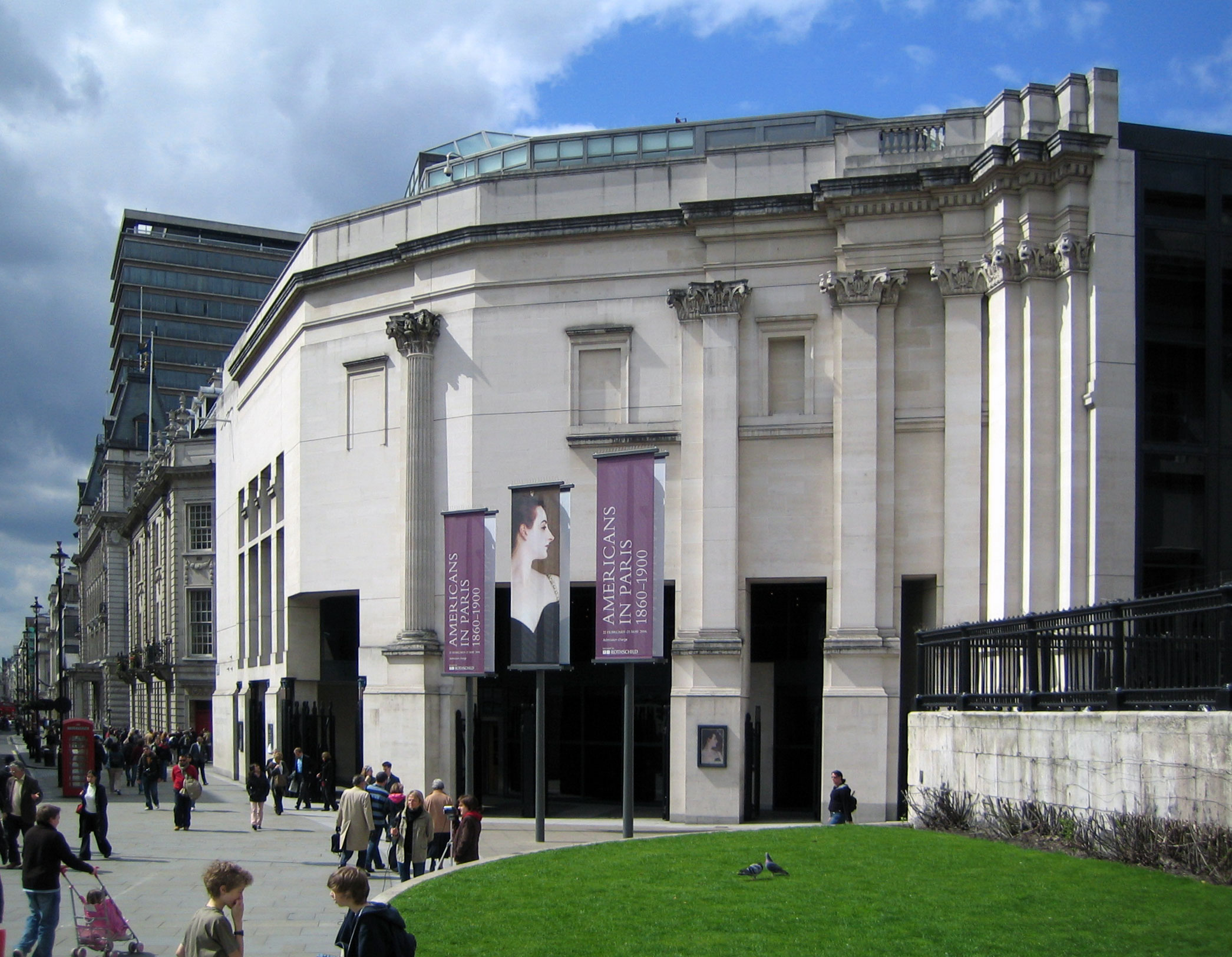
- Sainsbury Wing, National Gallery, London (1991) – one of the most discussed postmodern buildings in Britain.
- Wu Hall, Princeton University (1983) – a celebrated example of her postmodern contextual approach.
License: Wikimedia Creative Commons
6. Norma Merrick Sklarek (1926–2012)
Biography
Norma Merrick Sklarek was a trailblazing American architect who broke through both racial and gender barriers at a time when both were formidable obstacles. Born in New York City, she graduated from the Columbia University Graduate School of Architecture in 1950 and that same year became the first Black woman to be licensed as an architect in New York State. She later became the first Black woman licensed in California, in 1962.
Sklarek spent much of her career at the prestigious firm Gruen Associates, where she became the first Black woman to be made a Fellow of the American Institute of Architects (AIA). She co-founded Siegel Sklarek Diamond in 1980 – at the time the largest architecture firm in the United States owned by women. She is widely remembered as ‘the Rosa Parks of architecture’.
Notable Buildings / Achievements
- US Embassy, Tokyo (1976) – project architect for this significant diplomatic commission.
- Fox Plaza, Los Angeles (1987) – major commercial high-rise she oversaw as project director.
- First Black woman Fellow of the AIA (1980) – a milestone of historic significance for diversity in architecture.
Young Architect Summer Experience
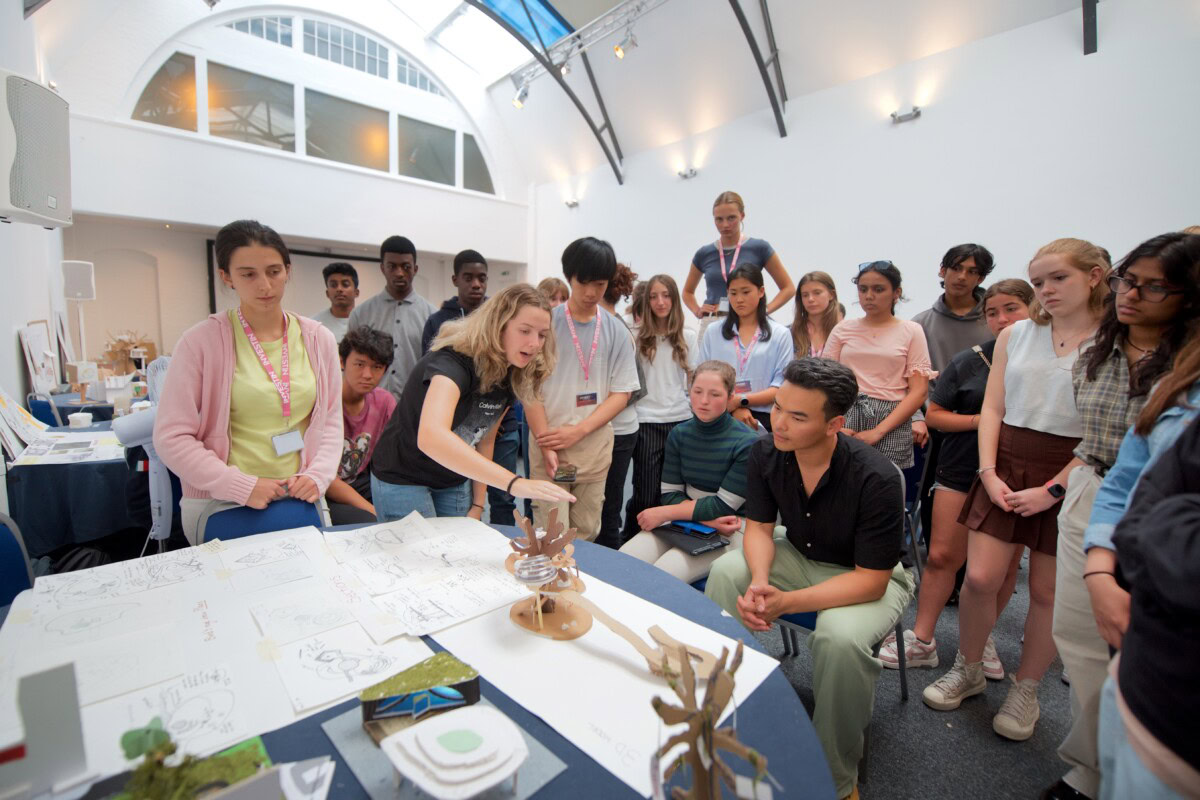
Immerse yourself in the career of an architect on our incredible summer programme. Design your own sustainable structure, get mentoring from professional architects, and receive feedback on your work from industry pros.
5. Lady Elizabeth Wilbraham (1632–1705)
Biography
Elizabeth, Lady Wilbraham was a member of the English aristocracy who has been identified as an important architectural patron – and, by some historians, as the first woman architect in Britain. Born Elizabeth Mytton into a wealthy family, she married Thomas Wilbraham at the age of 19 and turned their European honeymoon into an extended architectural study tour. In the Netherlands she met Pieter Post, creator of the Dutch Baroque style, and she went on to study the works of Palladio in the Veneto region of Italy. Back in England, she designed more than a dozen houses for her family and heavily annotated her 1663 edition of Palladio’s I Quattro Libri.
Although she is one of the most famous women architects in history, her story is debated by historians. John Millar has argued that she may have designed as many as 400 buildings and even tutored Christopher Wren, but Millar himself admits that not a single signed drawing survives connecting her with any project beyond her own family’s estates. She may have designed her own home at Weston Park, Staffordshire, in the 1670s, and she did produce the earliest architectural drawings known to be by a woman, for the rebuilding of St Andrew’s Church at Weston-under-Lizard.
Notable Buildings / Achievements
- Weston Park, Staffordshire (c.1671) – her home, attributed to Lady Wilbraham by some sources
- St Andrew’s Church, Weston-under-Lizard – she produced the earliest known architectural drawings by a woman in England for this church’s rebuilding.
- Wotton House, Buckinghamshire (rebuilt 1704–14) – attributed to Wilbraham by some historians, though authorship remains disputed.

License: Wikimedia Creative Commons
4. Julia Morgan (1872–1957)
Biography
Fourth on our list of the most famous women architects in history, Julia Morgan was a California architect who became one of the most prolific designers of the early twentieth century, completing over 700 buildings in her career. Born in San Francisco, she was the first woman admitted to the architecture programme at the École des Beaux-Arts in Paris. She returned to California in 1902 and set up an independent practice, quickly establishing a reputation for skilled, sensitive design drawing on Arts and Crafts, Mediterranean Revival, and Mission styles.
Morgan championed social causes throughout her career, designing numerous buildings for the Young Women’s Christian Association (YWCA) across California. Known for her exacting standards and warm client relationships (her decades-long collaboration with William Randolph Hearst on Hearst Castle being a prime example), she was awarded the AIA Gold Medal, the highest honour in American architecture, posthumously in 2014.
Notable Buildings / Achievements
- Hearst Castle, San Siméon, California (1919–1947) – her most celebrated project, a vast hilltop estate for media magnate William Randolph Hearst.
- YWCA buildings across California – dozens of community-focused commissions demonstrating her social commitment.
- AIA Gold Medal (2014, posthumous) – the highest honour in American architecture.
3. Louise Blanchard Bethune (1856–1913)
Biography
Louise Blanchard Bethune was the first professional woman architect in the United States, and she got there by sheer determination. Born in Waterloo, New York, she worked in a Buffalo architect’s office for five years before opening her own practice in 1881. She later became the first woman member of the American Institute of Architects in 1888, and the first to be elected to its prestigious fellowship.
Bethune was a woman of principle: when offered a commission on condition she accept a lower fee than standard – because of her gender – she declined outright. Her practice was highly productive, completing schools, factories, commercial buildings, and private houses across western New York. Though few of her buildings survive, her legacy as a trailblazer is unassailable.
Notable Buildings / Achievements
- Hotel Lafayette, Buffalo, New York (1904) – her most celebrated surviving work, now a listed historic landmark.
- Numerous schools and public buildings in western New York – a prolific and varied practice.
- First woman Fellow of the American Institute of Architects – a pioneering milestone in the history of the profession.
2. Patty Hopkins (born 1942)
Biography
Dame Patricia ‘Patty’ Hopkins is one of the most distinguished British architects of her generation and a co-founder of the high-tech movement in British architecture. Born in Bournemouth, she studied at the Architectural Association and co-founded Hopkins Architects with her husband Michael Hopkins in 1976. From the outset, their creative partnership was equal, in an era when women’s contributions to architecture practices were frequently overlooked.
Together, they developed a signature approach that combined advanced engineering with carefully considered materials and a deep respect for context. Patty Hopkins has been recognised with the Royal Institute of British Architects (RIBA) Gold Medal (jointly awarded, 1994) and was appointed Dame Commander of the Order of the British Empire in 2015.
Notable Buildings / Achievements
- Glyndebourne Opera House, East Sussex (1994) – a masterpiece blending contemporary design with a historic country house setting.
- Portcullis House, Westminster, London (2001) – the acclaimed office building for Members of Parliament, adjacent to the Houses of Parliament.
- RIBA Gold Medal (1994) – jointly awarded with Michael Hopkins; the most prestigious prize in British architecture.
1. Zaha Hadid (1950–2016)
Biography
If there is one name that has come to define the idea of a famous female architect, it is Zaha Hadid. Born in Baghdad, Iraq, Hadid studied mathematics in Beirut before moving to London to attend the Architectural Association, where she quickly dazzled tutors and fellow students alike. She founded her own practice in London in 1980 and spent the following decade producing visionary designs that initially proved almost impossible to build – her radical geometries and swooping forms were described as ‘paper architecture’ by critics who doubted they could ever become reality. They were wrong.
Hadid went on to create some of the most technically ambitious and visually stunning buildings ever constructed. In 2004, she became the first woman to win the Pritzker Architecture Prize. She was appointed Dame Commander of the Order of the British Empire in 2012. When she died suddenly of a heart attack in 2016, tributes poured in from across the globe. Her buildings continue to inspire a new generation of architects, and she more than merits her place as the most famous woman architect in history.
Notable Buildings / Achievements
- MAXXI Museum of 21st Century Arts, Rome (2009) – a fluid, layered building that seems to defy gravity.
- Heydar Aliyev Centre, Baku, Azerbaijan (2013) – a breathtaking curved structure of extraordinary technical achievement.
- London Aquatics Centre (2012) – designed for the London Olympics; one of the most visited buildings in Britain.
- Pritzker Architecture Prize (2004) – the first woman ever to receive this honour.

License: Wikimedia Creative Commons
Conclusion: Most Famous Women Architects in History
From the pioneering women of early modern Europe to Zaha Hadid reshaping the skylines of four continents, the women in our list persisted through prejudice, scepticism, and sometimes outright exclusion. The buildings they left behind are testament to what that persistence can achieve.
The story of famous female architects is still being written. More women are studying architecture than ever before, and if you’re reading this guide you may be dreaming of perhaps adding your own name to the list.
Experience a Career as an Architect
If you’re interested in becoming an architect, Dukes Plus’s Young Architect Summer Experience offers an unparalleled immersion into a career in the industry.
During this two-week architecture summer school in London for ages 15-18, you will:
- Visit a leading architecture and urban design firm
- Use industry-standard architectural sketching tools
- Design and create 3D building models using professional modelling techniques
- Create a design from a brief under supervision from real architects
You’ll be taught by experienced architects and receive career coaching on university choices and ways into the industry.
Hosted at the UCL campus in London, you’ll also experience what it’s like to study at one of the world’s top universities.
Learn more about The Young Architect Summer Experience or book your place today.
FAQs
The most famous women architects include Zaha Hadid, Julia Morgan, Kazuyo Sejima, and Denise Scott Brown. Most were born in the 20th century though earlier figures like Plautilla Bricci were designing buildings as early as the 1600s.
Many famous female architects were excluded from formal education, professional networks, and recognition systems for centuries. In some cases, their work was attributed to male colleagues or collaborators. Only more recently has scholarship begun to properly acknowledge the contributions of the most famous women architects in history.
There is no single definitive answer, but Plautilla Bricci is often cited as one of the earliest known professional female architects in Europe. In Britain, Lady Elizabeth Wilbraham is sometimes described as an early pioneer, although her role remains debated among historians.
Fame in architecture typically comes from a combination of influential designs, innovation, and cultural impact. The most famous female architects are often those who introduced new styles, redefined how buildings function, or shaped major cities, while also overcoming significant professional barriers.
Yes, the number of female architects has increased significantly in recent decades. Greater access to education and more inclusive professional environments have enabled more women to build high-profile careers. Architects like Zaha Hadid have also helped raise the visibility of women in the field globally.
You can learn more about how to become an architect or how to find architecture work experience in our dedicated guides.