

Architecture is a fascinating and sought-after profession – but with a long and rigorous qualification process, many students wonder how you become an architect in the UK.
In this guide, we’ll walk you through the process step by step – from the university and non-university routes into the industry, to what qualifications you need, and how long it takes to qualify.
Plus, you’ll hear about our Young Architect Summer Experience, an incredible architecture summer school for aspiring architects aged 15-18.
What Qualifications Do You Need to Become an Architect?
Architecture is a regulated profession in the UK. Only someone registered with the Architects Registration Board can legally use the title “architect” in business or professional practice. Architectural education is currently moving from the long-standing Part 1, Part 2 and Part 3 structure to a new framework. Under the traditional route, students complete:
- Part 1, usually through an undergraduate architecture degree
- Part 2, usually through a postgraduate architecture qualification
- Part 3, which assesses professional practice
- At least 24 months of relevant practical experience
ARB is replacing this structure with two accredited qualifications: a master’s-level qualification covering its Academic Outcomes and a practice qualification covering its Practice Outcomes. Existing courses are being transitioned gradually, so students should check the ARB status of any programme they are considering.
Part 1 qualifications will remain ARB-accredited until the end of December 2027. Existing Part 2 and Part 3 courses can continue through the transition, generally until the end of 2028. Current students may therefore complete the traditional pathway, while newer applicants may enter one of the reformed routes.
Check whether a qualification is accredited by ARB for the relevant route to registration. You may also wish to check whether it is validated by RIBA. Many UK architecture courses hold both forms of recognition, but they serve different purposes: ARB accreditation relates to legal registration, while RIBA validation supports the professional pathway towards Chartered Membership.
How Long Does it Take to Become an Architect?
Under the traditional university route, qualifying as an architect normally takes at least seven years. This typically includes five years of full-time academic study and at least 24 months of relevant practical experience. Part 3 is often completed part-time while the student is working, so it does not necessarily add a separate full year.
Many people take longer than seven years because they spend additional time in practice, study part-time or take a break between qualifications. Apprenticeship and reformed qualification routes follow different timetables.
| Stage | Duration |
|---|---|
| Part 1: Degree/Apprenticeship | 3-4 years |
| Work experience | 1 year |
| Part 2: Master’s Degree / Apprenticeship | 2 years |
| Practical training | 1 year |
| Part 3 | 1 year (often studied part-time while training) |
| Total | 7-8 years |
How to Become an Architect
As we have seen, becoming an architect takes a long time. In this section, we’ll cover all of the stages of the process in detail.
School
Your school studies are not an official part of the qualifying process. At this stage, it’s about preparing for Part 1 – your undergraduate degree or Level 6 Apprenticeship.
However, what you study at school is likely to have a major impact on your next steps. For instance, if you pick the wrong subjects at A Level or IB, you may not be accepted by your undergraduate architecture course of choice.
What Subjects Are Needed to Become an Architect?
Some universities require architecture applicants to have studied specific A Level / IB Higher Level subjects, others have preferred subjects but none formally required, while others still don’t express any preference at all.
It’s always best to check the latest requirements with the specific universities you are considering. However, as a general rule, if you want to become an architect then studying Art and Design and at least one of Maths and Physics at A Level or IB HL is a good idea. This reflects architecture’s interdisciplinary status as a subject that requires both artistic and creative ability and rigorous mathematical and engineering knowledge.
Some universities interview candidates for undergraduate architecture courses. In this case, you may need a portfolio of your work, including hand-drawn sketches, photographs, and models.
Part 1
Under the traditional structure, Part 1 is normally completed through a three-year undergraduate architecture degree. However, ARB accreditation of bachelor’s-level Part 1 qualifications is due to end after December 2027 as the regulator moves to its new qualification framework.
Universities may continue to offer undergraduate architecture degrees after that date, but those qualifications will no longer be ARB-accredited as Part 1 courses. They may instead provide the design knowledge and portfolio development needed to progress to an accredited master’s-level qualification.
Students beginning university in or after this transition should ask each provider how its degree connects to ARB’s new registration framework.
Option 1: Undergraduate Architecture Degree
The most common route to Part 1 is completing a BA or BSc in Architecture at a university accredited by the Royal Institute of British Architects (RIBA) and prescribed by the ARB. Before applying, check the qualification’s current ARB accreditation, RIBA validation and intended progression route. Do not assume that every degree with “architecture” in its title leads directly towards registration.
These degrees usually take three years full time and combine creative design with technical and theoretical study.
Much of the course is centred on studio projects, where students design buildings and develop their ideas through sketches, models, and digital drawings. This project-based learning helps students build a portfolio, which is an important part of progressing in architectural training.
After completing a Part 1 degree, graduates then spend one year gaining architecture work experience in a professional practice before moving on to the next stage of training.
Option 2: Level 6 Architectural Apprenticeship
An alternative route to Part 1 is completing a Level 6 Architectural Assistant Apprenticeship. This pathway allows students to earn a salary while studying and gain practical experience in an architectural practice from the start.
Architectural apprentices work in a practice while studying part-time with a university or training provider. The programme usually takes around four years to complete.
During the apprenticeship, students develop many of the same skills taught in undergraduate architecture degrees, including:
- Design and drawing techniques
- Building regulations and construction methods
- Architectural technology
- Professional practice
- Digital design tools such as CAD and BIM software
Apprentices spend most of their time working on live architectural projects under the supervision of qualified architects, gaining valuable industry experience alongside their academic learning.
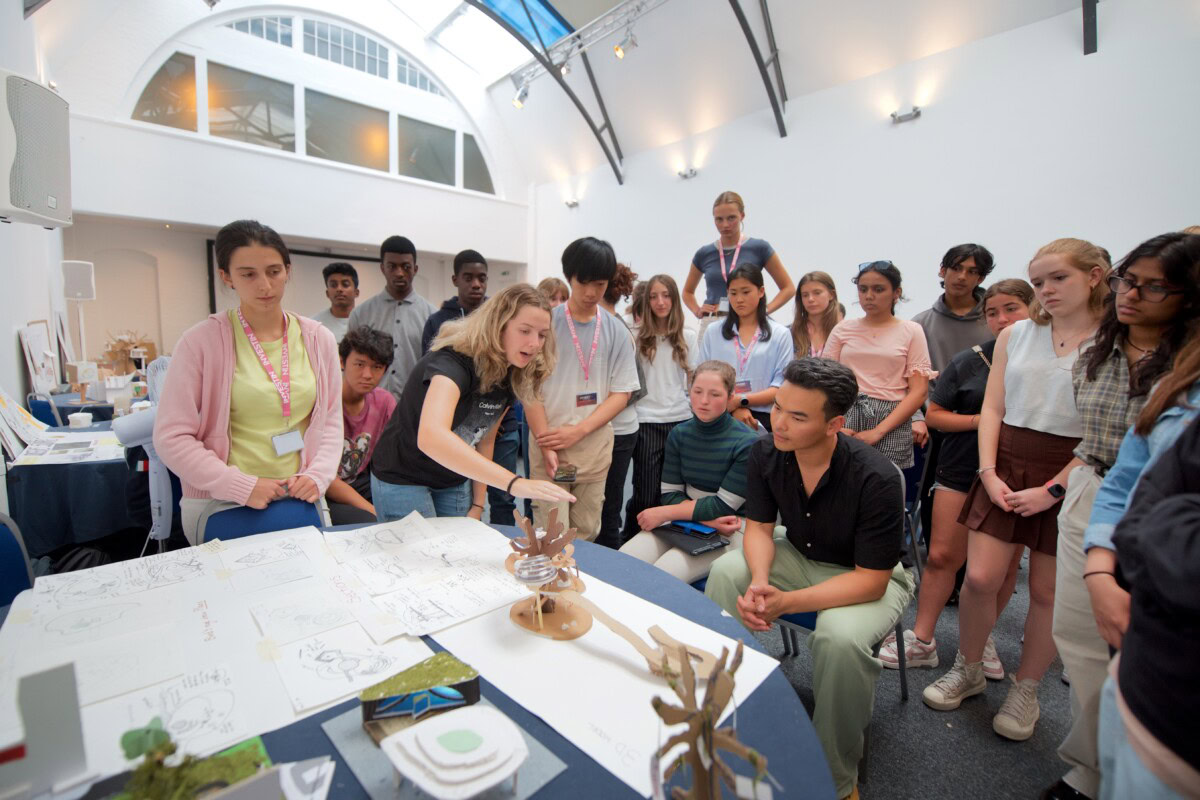
Young Architect Summer Experience
Immerse yourself in the career of an architect on our incredible summer programme. Design your own sustainable structure, get mentoring from professional architects, and receive feedback on your work from industry pros.
Part 2
Under the traditional route, Part 2 develops the design, technical and theoretical knowledge acquired at undergraduate level. It is commonly completed through a two-year, full-time MArch or another recognised postgraduate architecture qualification.
ARB is replacing Part 2 with accredited master’s-level qualifications assessed against its new Academic Outcomes. Existing Part 2 qualifications can continue during the transition, but applicants should check the current ARB status and how the provider plans to meet the new framework.
Option 1: Postgraduate Architecture Degree
The most common route to Part 2 is a Master’s degree in architecture, usually titled MArch or Diploma in Architecture. These programmes typically take two years of full-time study.
Part 2 courses are more advanced and expect students to develop a stronger personal design approach while exploring complex architectural problems. Design studio work continues to be the centre of the course. Students often work on larger and more complex design projects, sometimes addressing urban planning challenges, public buildings, or regeneration schemes.
Many courses also involve research-based design projects, allowing students to explore social, environmental, or cultural questions through architecture.
Option 2: Level 7 Architect Apprenticeship
In England, the current Level 7 Architect Apprenticeship combines paid employment with postgraduate study. Unlike the description of the university route above, the apprenticeship incorporates qualifications at both Part 2 and Part 3 under the existing framework.
It typically takes around four years and requires an appropriate Part 1 qualification or equivalent for entry. Apprentices work in practice, complete academic and professional study and undertake an end-point assessment.
After successfully completing the required qualifications and practical-experience conditions, candidates can apply to join the ARB Register. Providers will need to adapt their programmes as ARB introduces its new academic and practice outcomes, so check the latest qualification details before applying.
Part 3
Part 3 is the final step towards becoming an architect in the UK. Completing this stage allows you to register as an architect with the ARB and become a chartered member of the RIBA. A variety of universities and professional bodies offer Part 3 courses.
Unlike earlier stages of architectural education, Part 3 focuses less on design and more on professional practice. It assesses whether you have the knowledge, experience, and judgement needed to manage architectural projects responsibly and operate within the legal and regulatory framework of the profession.
Most Part 3 programmes take around 9–12 months to complete, usually studied part-time while working in an architectural practice. Remember, after finishing Part 2 you still need to complete a second year of work experience before you can become an architect.
Part 3 is usually assessed using:
- A written case study
- A professional written exam
- An oral exam
- A professional development review (CV and career appraisal)
Becoming a Registered Architect
After completing the required qualifications and practical experience, you can apply to join the Register of Architects maintained by ARB. Registration is not automatic: ARB checks your qualifications, experience and supporting evidence before admitting you to the Register.
Only someone on the ARB Register may use the title “architect” in business or professional practice in the UK. Registration must then be maintained in accordance with ARB’s requirements.
ARB registration and RIBA membership are separate. Once registered, eligible architects may apply for RIBA Chartered Membership. Joining RIBA is optional, but it provides professional recognition, resources and networking opportunities.
Looking for more inspiration? Explore our guide to the most famous women architects in history to learn more about pioneers in the profession.
Applying to Architecture at University?
If you’re applying to architecture at a top UK university, we can he can help. Our UK & Oxbridge application support includes expert preparation for personal statements, admissions tests, and interviews.
What Skills Do You Need to Become an Architect?
To become an architect, you need a mix of creativity, technical knowledge, and strong professional skills. Architects are responsible for designing buildings, managing complex projects, and working closely with clients, engineers, and construction teams.
Creative and Design Skills
Architecture is fundamentally a design discipline. Successful architects need strong creative thinking and the ability to turn ideas into practical building designs.
Important creative skills include:
- Imagination and visual thinking to develop innovative design concepts
- Drawing and design ability, both by hand and using digital tools
- Attention to detail, ensuring designs are accurate and workable
- An understanding of spatial design and how people interact with buildings
Technical and Analytical Skills
Architects must also understand how buildings function structurally and technically. This requires strong analytical and problem-solving abilities.
Key technical skills include:
- Knowledge of building materials and construction methods
- Mathematical knowledge for scale, proportion, and structural concepts
- Analytical thinking and reasoning skills to solve design and engineering challenges
- Confidence using architectural software, such as CAD and BIM tools
Professional and Communication Skills
Architecture is highly collaborative. Architects regularly work with clients, planners, contractors, and other specialists throughout a project.
Important professional skills include:
- Clear verbal communication when presenting ideas to clients or teams
- Teamwork and collaboration with engineers, surveyors, and builders
- Organisation and project management to coordinate complex design and construction stages
- Negotiation skills when managing client expectations, budgets, and regulations
Working Style and Personal Qualities
Architectural work can be demanding, with tight deadlines and multiple responsibilities.
Successful architects are often:
- Highly organised and able to manage multiple tasks
- Comfortable working in fast-paced and high-pressure environments
- Thorough and detail-oriented when developing designs and technical drawings
- Skilled at balancing creativity with practical constraints
Experience a Career as an Architect
If you’re interested in becoming an architect, Dukes Plus’s Young Architect Summer Experience offers an unparalleled immersion into a career in the industry.
During this two-week summer school in London for ages 15-18, you will:
- Visit a leading architecture and urban design firm
- Use industry-standard architectural sketching tools
- Design and create 3D building models using professional modelling techniques
- Create a design from a brief under supervision from real architects
You’ll be taught by experienced architects and receive career coaching on university choices and ways into the industry.
Hosted at the UCL campus in London, you’ll also experience what it’s like to study at one of the world’s top universities.
Learn more about The Young Architect Summer Experience or book your place today.
FAQs
Yes. You need to complete the qualifications required by ARB, but the route does not always have to be a conventional full-time undergraduate degree. Apprenticeships and work-based pathways are also available, and the new framework will create different entry routes.
The traditional route usually takes at least seven years, including five years of academic study and at least 24 months of practical experience. Many candidates take longer.
ARB is replacing the three-Part regulatory structure with two accredited qualifications: one at master’s level and one covering professional practice. Existing courses remain subject to transitional arrangements.
Requirements vary. Art and Design can support portfolio development, while Maths or Physics can strengthen technical preparation. Some universities require no specific A-level subjects.
Drawing skills are useful, but you do not need to be an expert artist. Architecture students learn to communicate their plans and ideas through sketches, models, and digital design tools such as CAD. Becoming proficient with these methods and tools is important, but it doesn’t require outstanding drawing ability.