

The media is a large and enormously varied industry, encompassing everything from publishing and journalism to film production and video effects. Finding media work experience is essential for breaking into whichever part of the industry interests you, but advertised placements are highly competitive.
In this guide, we’ll explore how to find media work experience, from placements for students in Years 10 and 12 to opportunities for older budding media professionals. Covering both advertised opportunities and speculative applications, we’ll advise on where to look and how to improve your applications.
We also discuss Dukes Plus’s own Young Media Manager Summer Experience and Young TV & Filmmaker Summer Experience. These are immersive career summer schools for ages 15-18, hosted in London.
Media Work Experience Year 10
In Year 10, your opportunities for finding media work experience are more limited than they will be for older students. However, there are still valuable placements out there.
At this stage, work experience is about getting used to a professional environment and learning more about the industries that interest you and what a career in them could involve. This will help you make sensible choices over the next few years.
Specific Schemes
There are a small number of official media work experience schemes for Year 10 students. Many of them are likely to be remote. These include:
- Channel 4’s 4Skills – ages 14+, online modules
- Young Reporter Scheme – open to Years 10-12; enables those aiming to become journalists to write one article per month for publication in online newspapers
Advice on How to Look
Finding media work experience in Year 10 can feel challenging, as many formal placements are designed for older students. However, there are still avenues to explore to gain useful experience.
The first port of call should be your school’s Careers Advisor. If they can’t find you a placement, then try the following options.
Local Media Organisations
A good place to start is with local media organisations. Smaller outlets such as local newspapers, magazines, community radio stations, and independent production companies are often more flexible and open to younger students. They may not advertise work experience formally, so it’s worth reaching out directly with a polite email explaining your interest.
Online Platforms and Social Media
Although many structured programmes are aimed at older students, it’s still worth exploring opportunities online. Company websites often have careers pages, and platforms like LinkedIn can help you identify organisations and make professional connections.
Following media companies on social media can also be useful, as smaller organisations and creators sometimes share opportunities or may be open to direct messages from enthusiastic students.
Insight Days and Shadowing
For Year 10 students, shadowing and insight days are often more realistic and accessible than formal work experience placements. Shadowing usually involves spending a day or two observing someone in a media-related role, which helps you understand what their day-to-day work looks like and gives you the chance to ask questions.
Insight days are slightly more structured and are sometimes offered by media companies or organisations, giving you a brief introduction to different roles, departments, and career pathways. While both options are short and may be less hands-on, they still demonstrate initiative and can provide a useful early understanding of the media industry.
Media Work Experience Year 12
In Year 12, the number of media work experience programmes available to you increases significantly. While organisations might expect you to have a clearer idea of your specific areas of interest, you are also more likely to learn higher-level concepts and be given more engaging work to do. While there may still be plenty of tea-making and office admin in your placement, plenty of hands-on media and creative experience could be coming your way.
Specific Schemes
More organisations run official work experience schemes for Year 12 students. These could still be online but more will take place in person. A wider variety of industries and skills are also covered, including film & TV, journalism, publishing, video effects and many more. For instance:
- BBC ‘Get In’ – ages 16-18, offered throughout the UK
- Framestore VFX
- Young Film Academy
Advice on How to Look
Local Opportunities
Local media organisations remain a valuable option – just as in Year 10 – but your approach should now be more targeted. Instead of simply asking to observe, you should aim to take on more responsibility, whether that’s contributing ideas, helping with research, or assisting with content production.
At this stage, even smaller placements can become meaningful additions to your CV, particularly if you can demonstrate what you contributed and learned.
Online Platforms and Direct Outreach
Online platforms become more important in Year 12, especially for finding advertised roles and making professional connections. Platforms like LinkedIn are useful for identifying opportunities, following companies, and reaching out with well-written messages.
You should also regularly check company careers pages and sign up for newsletters or alerts from media organisations. Many opportunities are only open for a short window, so staying organised is key.

Young Media Manager Summer Experience
Immerse yourself in the career of journalist on our incredible summer programme. Present a mock broadcast from a real news studio, manage comms in a simulated PR crisis, and meet top journalists, publicists, and media strategists.
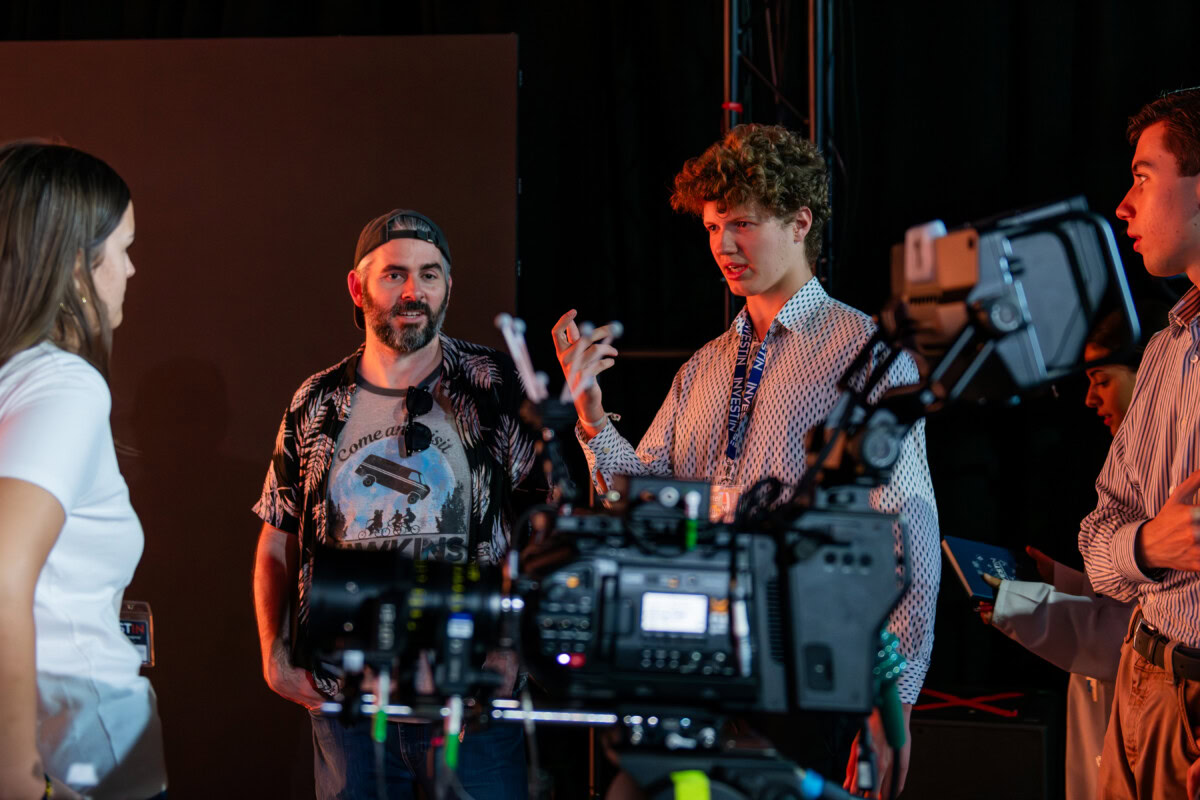
Young TV & Filmmaker Summer Experience
Experience a career in TV & Film on this once-in-a-lifetime summer school. Write, film, and edit your own scene; visit a live TV studio; and learn from professional filmmakers.
Schemes for Ages 18 and Above
For ages 18 or above, many, many media organisations run advertised work experience or internship programmes. Best practice is to do more detailed research both locally and nationally in sectors that you’re particularly interested in.
Here are just a few examples.
- Banijay UK – Brightbulb internship in unscripted TV
- BFI – paid internships at the British Film Institute are listed here
- Famegate Studios
- Fremantle Media – global entertainment group behind many massive TV shows, especially unscripted
- Grierson Trust’s DocLab – one-year training for 18- to 25-year-olds interested in factual TV and documentaries
- ITV – online plus option to apply for 1 week in-person, advertised via ITV Careers
- Lime Pictures
- NCTJ jobs board for journalism, also advertises internships
- Twickenham Studios
- Warner Bros internships and early career opportunities
Other Routes to Explore
Ask Your School
Your school should be one of your first points of contact. Teachers and careers advisers often have insight into local media orgs which are amenable to taking on work experience students, where previous students have secured placements, or alumni working in the media who may be able to help out.
In some cases, they may be able to recommend specific organisations or support you in approaching them.
Ask Friends and Family
Personal networks are very valuable in securing even short-term work experience in the media. Let you friends, parents, and extended family know what kind of placement you’re looking for. It may be that they – or someone they know – work in media or a related field such as marketing or communications and can help you.
Rather than asking broadly for “any work experience,” try to have a clear focus. For example, you might ask to be introduced to someone working in journalism, production, or digital content so you can explore relevant opportunities.
Research Opportunities Yourself
Independent research is one of the most effective ways to find media work experience. Being able to secure a placement for yourself will also teach you valuable skills in an industry where networking and self-employment are central.
Social media networking
Platforms like LinkedIn can help you network with professionals, research companies, and make informed, professional enquiries. They’re also a great shop window for your passion, commitment, and skills. Make sure your profile looks professional, up to date, and clearly reflects your areas of interest.
Finding local media businesses
If you already have an idea of the area of media you’re interested in – such as film and TV production, radio, journalism, marketing, graphic design, or video game development – you can start by building a list of relevant organisations within commutable distance of your home.
Starting with local companies means you will be competing against a much smaller pool of other students. Don’t be put off if the organisation doesn’t advertise placements – making a speculative enquiry can still lead to good results if your application is clear, professional, and polite.
Going beyond the obvious
You can also think more broadly about where media roles exist. Large local employers, including councils, universities, and major businesses, often have in-house marketing or communications teams that can offer valuable experience.
Far fewer students will think to apply to, say, the nearby university’s press team than to a national newspaper, so your chances of success will be higher.
Use local and community resources
Local authority websites and community organisations can be a useful but often overlooked source of opportunities. Arts centres, theatres, and cultural venues sometimes offer placements or short-term roles, particularly for students interested in creative or production work.
Taking the time to explore these resources and build your own list of potential organisations can give you a significant advantage, especially when many opportunities are not widely advertised.
Tips on Applying for Media Work Experience
If you’ve found an organisation that offers media work experience or you’re applying on spec, these tips will boost your chances of success.
Tailor Your Application
Before you apply, take time to research the organisation properly. Find out what exactly it is that they do and explore some of their content. In your application, explain what stood out to you and why.
Addressing your application to the correct person – such as an editor or producer – immediately makes a stronger impression. You can often find names in a publication’s masthead or on a company website. If it’s not clear, consider call the company and ask.
Show Personality and Genuine Interest
Media is a creative industry, so your application should reflect some personality. Try to avoid corporate language, and instead aim to sound natural and engaged (while remaining professional, of course).
If you have a genuine interest in a particular area – whether that’s journalism, film, or digital content – don’t be afraid to express your opinions or enthusiasm. For example, referencing a current show, trend, or topic you care about can help your application feel more memorable.
Keep It Concise and Focused
Editors and recruiters often review a high volume of applications, so clarity is essential. Your cover letter should highlight the most relevant points early on, rather than including everything you’ve ever done.
Focus on:
- Your interest in this specific area of the media
- Any relevant experience or projects
- What you can contribute
Check Your Work Carefully
Accuracy matters. Spelling and grammar mistakes can quickly undermine an otherwise strong application, especially in fields like journalism or publishing.
Always proofread your work carefully. Reading your application aloud can help you catch errors and improve the flow of your writing.
Prepare for Interviews
If you are interviewed as part of your application, then preparation can make a big difference. As well as general good practice for interviews, like re-reading the placement description and thinking about why you would be a good fit, there are a couple of extra steps which are more specific to media placements.
The media is creative, so come prepared with ideas. For work experience at a newspaper, this could be ideas for stories to pitch, or at a TV company, a new unscripted show format or documentary idea. Even simple, well-thought-out ideas show that you understand their audience and are already thinking like a contributor rather than just an applicant.
Secondly, show that you’re open to trying different roles or tasks, and that you’re keen to get involved. At this stage, attitude and willingness to learn can be just as important as experience.
Creating your own work experience
If you’re struggling to secure formal work experience, creating your own opportunities is a highly effective alternative. In media, what you produce often matters more than where you’ve worked, so building your own portfolio can be just as valuable as a placement at a big-name company.
Nowadays, the barriers to creating and sharing your own work are as low as they’ve ever been. So there is really no excuse for not doing this – any employer will question your commitment and skills if you can’t show what you can do.
Build a Digital Portfolio
A digital portfolio allows you to showcase your work in one place. This could be a simple website or a platform like Behance or Weebly.
Your portfolio might include articles, videos, photography, or design work, depending on your interests. This should feel curated and intentional – not just a collection of everything you’ve done, but a clear reflection of your strengths.
Start a Blog
Creating a blog is a straightforward way to demonstrate your writing skills and interests. It’s best to carve out a specific niche for yourself. Try to focus on a particular area that engages you, as this will make you more memorable and allow you to develop a higher level of expertise.
Consistent publishing matters more than one or two painstakingly crafted articles. Regularly producing content shows commitment and helps you develop your voice and style over time.
Produce Video Content
If you’re interested in film, TV, or digital media, creating your own video content is a strong way to build experience. This might include short films, interviews, reviews, or social media content.
You don’t need super expensive equipment. Many successful 21st-century media careers have been launched using a phone camera and cheap, easy-to-learn video editing software.
Through this, you can develop practical skills such as filming, editing, and storytelling, while also building a body of work to share in applications.
Create a Podcast
Podcasting is another effective way to demonstrate creativity and communication skills. All you need is a computer, ideally a good microphone, and some free audio editing software. Once again, focusing on a particular niche is the best approach here.
It’s also good practice to share and promote your work, for instance on social media. If you can prove that you can find and engage an audience, your job applications will immediately stand out to employers.
Media Work Experience with Dukes Plus
Dukes Plus offers two media career summer experience programmes in London for ages 15-18:
- The Young Media Manager Summer Experience – ideal for students interested in journalism, marketing & PR, and content creation
- The Young TV & Filmmaker Summer Experience – ideal for students interested in television and film
These programmes last 1-2 weeks and are hosted at University College London. Students learn from industry professionals, experience careers in their chosen fields, and have the chance to gain a UCAS-accredited work experience qualification to boost their university applications.
FAQs
Yes – advertised placements, especially with well-known organisations, can be very competitive. However, many opportunities are not widely advertised. Taking a proactive approach – through local organisations, networking, and speculative applications – can significantly improve your chances.
You can create your own experience. Building a portfolio through a blog, video content, or a podcast is highly valued in media. Employers often care more about what you can produce than where you’ve worked, so self-directed projects are a strong alternative.
A strong application is tailored, concise, and shows genuine interest. You should demonstrate that you’ve researched the organisation, explain why you’re interested, and highlight relevant experience or projects. Adding personality and enthusiasm – while staying professional – can also help you stand out.
Both are worth applying to, but they offer different advantages. Large organisations often have structured programmes and strong name recognition, but they are highly competitive. Smaller local organisations are usually more accessible and may offer more hands-on experience.
A balanced approach is best – apply to well-known schemes, but also reach out to local companies, community organisations, and in-house media teams. You’re more likely to secure a placement locally, and the experience can be just as valuable.
In Year 10, focus on getting whatever relevant experience you can, rather than aiming for the most prestigious media organisations. Opportunities for younger students are more limited, so it’s best to prioritise local organisations, ask your school’s Careers Advisor for support, and consider informal options like shadowing or insight days.
You may need to be more flexible and open-minded about the type of experience you take on. At this stage, the goal is to explore the industry and gain confidence, rather than secure a highly competitive placement.
In Year 12, there are more formal work experience programmes available, but don’t forget that unadvertised, local experience is still a very valuable option. Employers will expect a clearer sense of your interests and some evidence of your skills. You should also be more proactive with networking and direct outreach, as well as prepared to contribute ideas and take on more responsibility during placements.